
Traditional Japanese Gardens: Styles, Aesthetic Principles and Cultural Significance
 By Robson Caitano · Updated
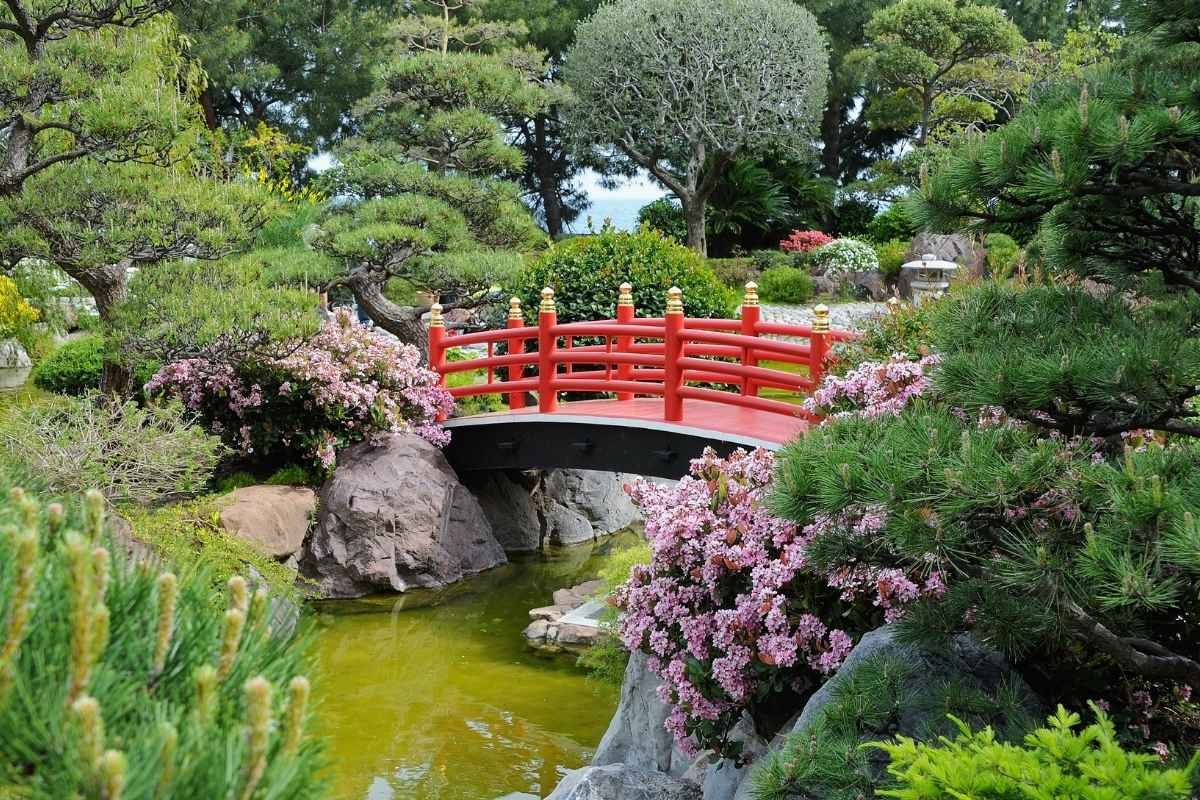
Traditional Japanese gardens bring together plants, stones, water and architecture in carefully composed landscapes. Their character depends on relationships: a branch framing a distant view, a path revealing a pond or an open area giving prominence to a group of rocks.
These gardens developed in different settings, including temples, residences and places associated with tea. Their purposes and appearances vary accordingly.
Understanding that variety makes a visit more rewarding. A dry landscape viewed from a veranda offers a different experience from a large pond garden explored on foot, even when both draw on related ideas about landscape and observation.
What defines a traditional Japanese garden?
There is no single arrangement that represents every Japanese garden.
Some contain ponds, bridges and planted islands. Others use rocks and gravel to suggest landscapes without relying on flowing water. Tea gardens organize the approach to a teahouse, while strolling gardens reveal changing scenes along a route.
The Japan National Tourism Organization identifies these different garden traditions as part of a broad landscape culture.
For visitors, the most useful starting point is to ask how a particular garden is intended to be experienced. Is it designed for walking, viewing from a building or approaching a specific destination?
That question helps explain choices that might otherwise appear purely decorative.
The main styles of Japanese gardens
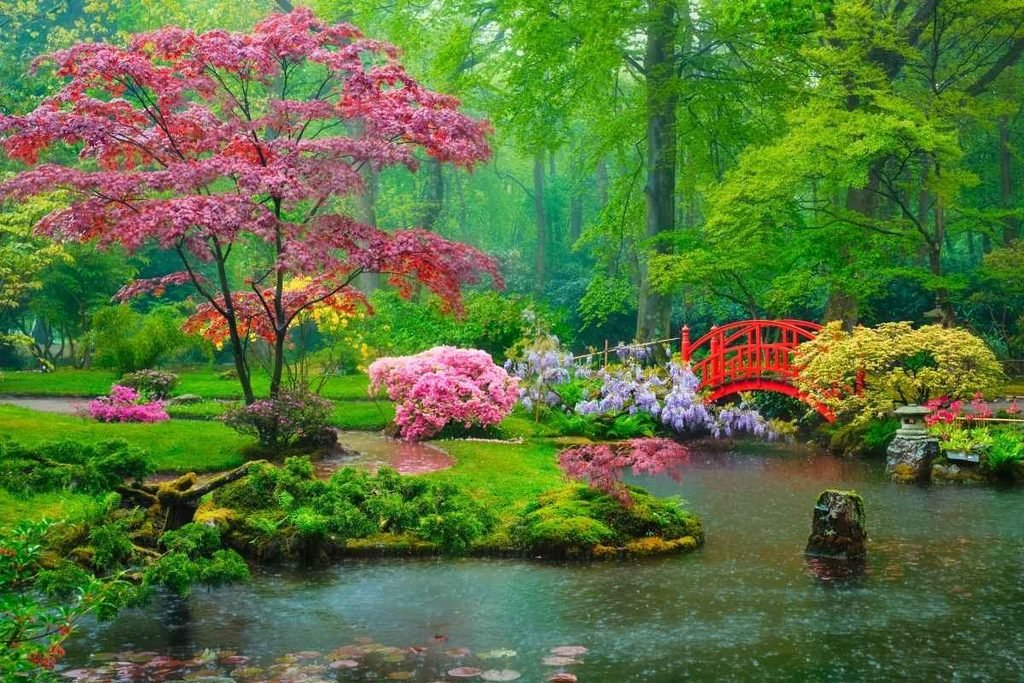
Garden categories are useful, but they can overlap. A large garden may contain a pond, a dry landscape section and a tea garden within the same grounds.
Pond and strolling gardens
Pond gardens organize part of their composition around water. Islands, banks, bridges and nearby planting contribute to the views.
In a strolling garden, movement becomes central to the experience. Paths bring different elements into view and change the relationship between foreground and background.
Kenrokuen in Kanazawa provides an example of a garden with circulating paths, ponds and artificial hills. Its layout encourages visitors to discover the landscape through walking rather than from a single fixed position.
Dry landscape gardens
Dry landscape gardens, known as karesansui, use elements such as rocks, gravel and sand to create or suggest a landscape.
The absence of a pond does not mean water has no role in the composition. Raked surfaces and stone arrangements can evoke water and land through abstraction.
Ryōan-ji in Kyoto is a well-known example associated with this tradition.
“Zen garden” is a familiar expression, but it should not be used as a label for every Japanese garden. Different garden forms have different histories and settings.
Tea gardens
Tea gardens are closely associated with the approach to a teahouse.
As the practice of tea developed in the 16th century, roji gardens became part of that setting. Their paths and spaces help structure the transition toward the tea gathering.
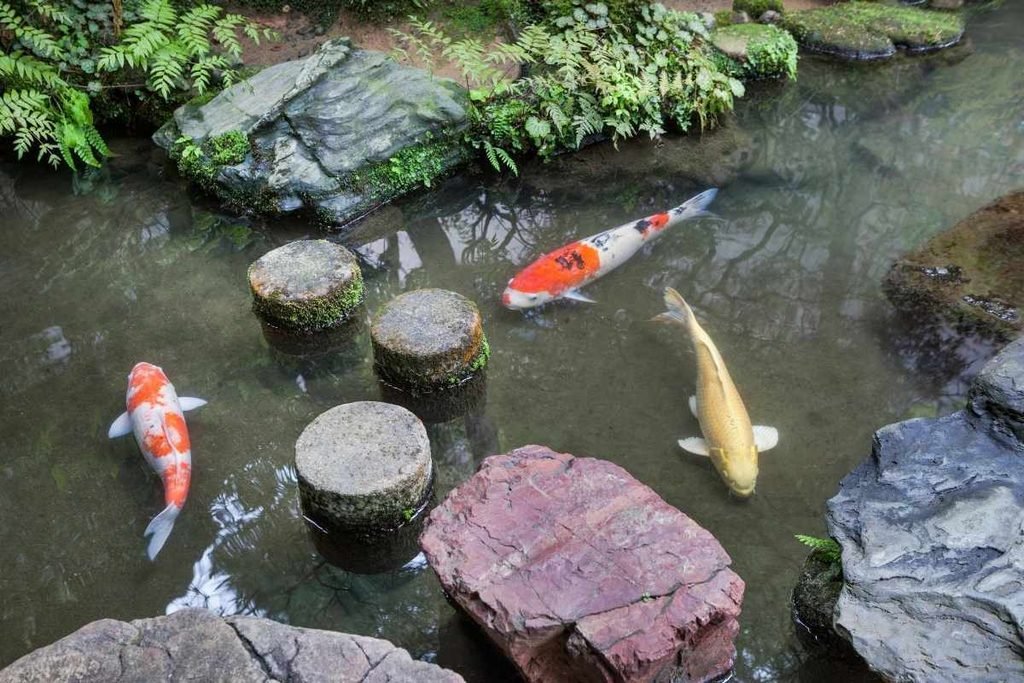
Stepping stones and other features make the route itself part of the experience. To appreciate such a garden, notice the sequence of arrival rather than looking only for a broad scenic view.
Aesthetic principles to notice
Japanese gardens can be explored through several design ideas. These offer ways to observe a particular garden without assuming that every feature has a universal meaning.
Composition and the relationship between elements
A stone, tree or lantern gains significance from its position within the whole.
Look at how elements relate across different distances. A nearby branch may frame a pond, while planting behind it creates depth.
The New York Botanical Garden’s research guide describes Japanese garden composition through foreground, middle ground and background, including scenery beyond the garden itself.
This gives visitors a practical method: begin with what is closest, then follow the composition outward.
Borrowed scenery
Shakkei, often translated as “borrowed scenery,” incorporates something beyond the garden boundary into its composition.
A distant ridge or another landscape feature can become an essential part of the garden’s visual structure rather than simply appearing behind it.
When viewing a garden, ask where the designed space seems to end. The physical boundary and the visual boundary may be different.
Movement and changing viewpoints
A path can determine when a scene appears and how long it remains visible.
Instead of assuming that the widest view is the most important one, notice the transitions. A narrow approach may open onto water; a turn may bring a previously hidden element into focus.
Try pausing at different points. Small changes in position can alter the apparent balance of the landscape.
Seasonal change
Plants make gardens responsive to time.
Leaves, new growth, bare branches and changing weather affect what becomes prominent. Seasonal care can also become part of a garden’s appearance.
At Kenrokuen, yukitsuri ropes support branches against heavy snow. Their recognizable winter forms arise from a practical need to protect the trees.
A garden therefore has several seasonal identities rather than one definitive appearance.
Cultural significance beyond the scenery
Traditional Japanese gardens connect landscape design with the activities and institutions around them.
A temple garden belongs to a different context from a former lord’s strolling garden. A tea garden relates to a particular sequence of preparation and hospitality.
Understanding that setting helps avoid treating all gardens as interchangeable places of quiet contemplation.
Kenrokuen, for example, developed beside Kanazawa Castle during the Edo period and was expanded over generations by the Maeda family. That history places its landscape within the world of domain rulers and their residences.
Before visiting, learning who commissioned a garden and how it was used can provide more insight than memorizing a list of supposed symbols.
The maintenance behind the landscape
A garden’s appearance depends on continuing work.
Pruning, weeding, sweeping, stonework and the care of planted surfaces help preserve relationships that would otherwise change as vegetation grows and materials deteriorate.
The Seattle Japanese Garden describes these practices as an “art of maintenance,” emphasizing the skilled work required to sustain a living landscape.
Maintenance is therefore part of garden design over time. Decisions about what to remove, retain or protect influence the experience of future visitors.
Caring for living surfaces
Moss, planted banks and carefully maintained ground surfaces can look robust while remaining vulnerable to foot traffic.
Stay on designated routes and avoid stepping onto moss or raked areas. Garden visitor guidance commonly treats these surfaces as protected parts of the composition.
Protecting trees through the seasons
Seasonal protection shows how garden care responds to local conditions.
The snow supports at Kenrokuen are a visible example: ropes help prevent branches from breaking under the weight of heavy snowfall.
Observing such work adds another dimension to a visit. The landscape records both growth and the expertise of the people caring for it.
How to appreciate a Japanese garden during a visit
Begin by identifying the intended viewing position or route. Give yourself time to sit where seating is provided, especially when the garden is composed to be seen from a building.
Look for relationships before concentrating on individual objects. Notice how trees frame views, how stones connect with nearby planting and how paths influence your pace.
Avoid assigning a fixed meaning to every feature. Read the garden’s interpretation or join a guided visit when available to understand its specific history.
Finally, allow the conditions of the day to be part of the experience. Rain, cloud and seasonal changes can reveal qualities that differ from familiar promotional photographs.
Frequently asked questions
Are all Japanese gardens Zen gardens?
No. Japanese gardens include pond gardens, strolling gardens, tea gardens and dry landscapes. “Zen garden” does not describe the whole tradition.
What is a karesansui garden?
It is a dry landscape garden that uses elements such as rocks, gravel and sand to compose or suggest landscape features.
What does borrowed scenery mean?
Borrowed scenery, or shakkei, incorporates a view beyond the garden boundary into the garden’s composition.
Why do some Japanese gardens have ropes around trees in winter?
In snowy regions, arrangements such as yukitsuri support branches and help prevent snow damage. Kenrokuen is particularly known for this seasonal practice.
Do traditional Japanese gardens require much maintenance?
Their carefully managed appearance depends on regular, skilled care. Tasks can include pruning, weeding, sweeping and maintaining stonework through seasonal change.