
Berlin Street Art: History, Cultural Expression and Urban Identity
 By Robson Caitano · Updated
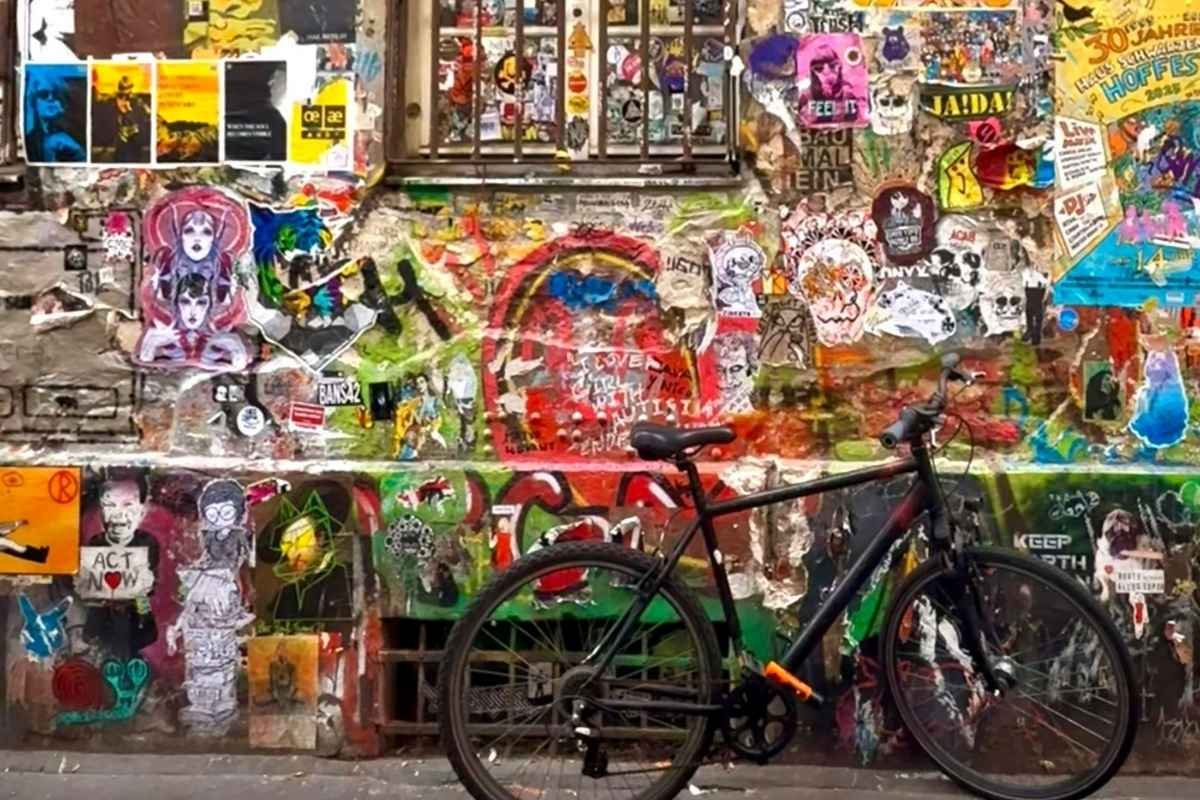
Berlin’s street art connects images with the places in which they appear. A painting on a surviving section of the Berlin Wall carries a different meaning from a mural overlooking a residential street or a small pasted image inside a courtyard.
Together, these works offer ways to explore the city’s political history, artistic communities and changing public spaces.
Some have become internationally recognized landmarks. Others are temporary, anonymous or easy to overlook. Understanding Berlin’s urban art means paying attention to both the image and its surroundings.
Street art and the history of the Berlin Wall
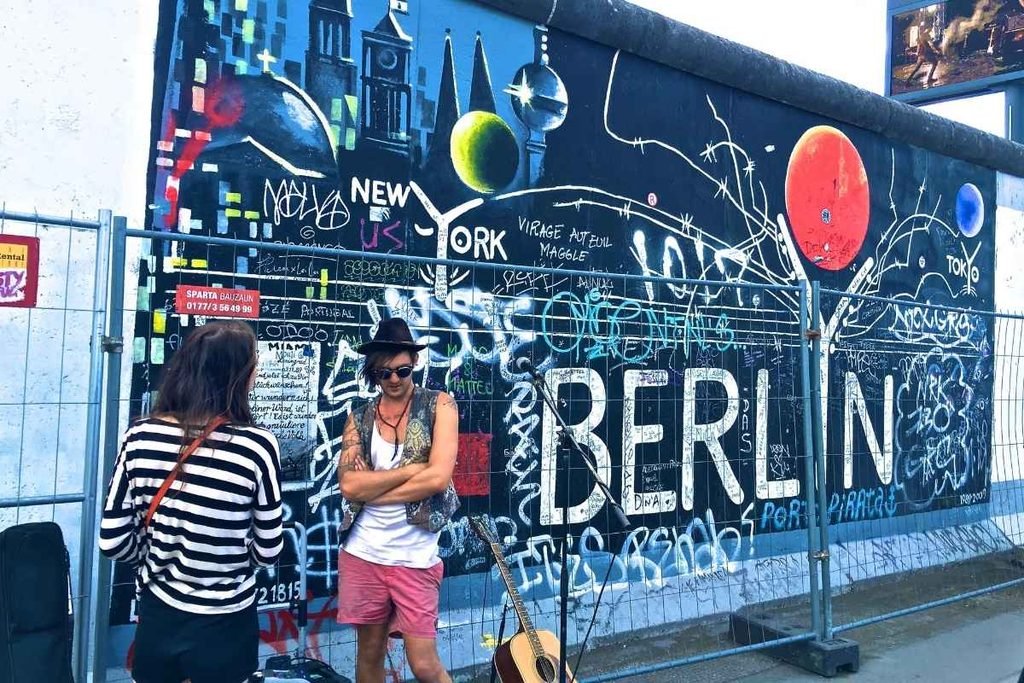
The Berlin Wall occupies an important place in the city’s visual culture.
Before its fall, artists and members of West Berlin’s subcultures used its western face for paintings, graffiti and political messages. By the mid-1980s, graffiti writing influenced by New York’s subway culture had also appeared on the Wall.
That history requires a geographical distinction. Artistic access to the western face did not mean people could approach and paint the border freely from both sides.
The painted surface existed within a system of division. Its visibility could challenge or reinterpret that system, while the Wall itself continued to restrict movement.
This tension remains essential to understanding images made on it.
The East Side Gallery: painting after division
The East Side Gallery emerged in 1990, following the opening of the Wall in November 1989.
Between February and September 1990, 118 artists from 21 countries painted a surviving section along Mühlenstraße. Their works responded to political change, freedom and the experience of divided Germany.
The project transformed a former border structure into a setting for artistic responses to a changing Europe.
Images with historical context
Two particularly recognizable paintings are Birgit Kinder’s image of a Trabant breaking through the Wall and Dmitri Vrubel’s depiction of the embrace between Leonid Brezhnev and Erich Honecker.
Their familiarity can make them seem immediately understandable. Looking into their political references, however, adds depth beyond their appearance in travel photographs.
It is also worth spending time with less familiar works. The gallery contains varied artistic responses rather than a single shared interpretation of reunification.
Preservation and repainting
The East Side Gallery is both an art site and a historical monument.
Exposure to weather and damage made repairs and repainting necessary from the 1990s onward. The Berlin Wall Foundation explains that many artists returned to restore or recreate their works.
What visitors see today therefore involves a history of conservation as well as the original artistic project.
That makes it useful to ask two questions: what did the artist communicate in 1990, and how has the work survived since then?
Kreuzberg and large-scale murals
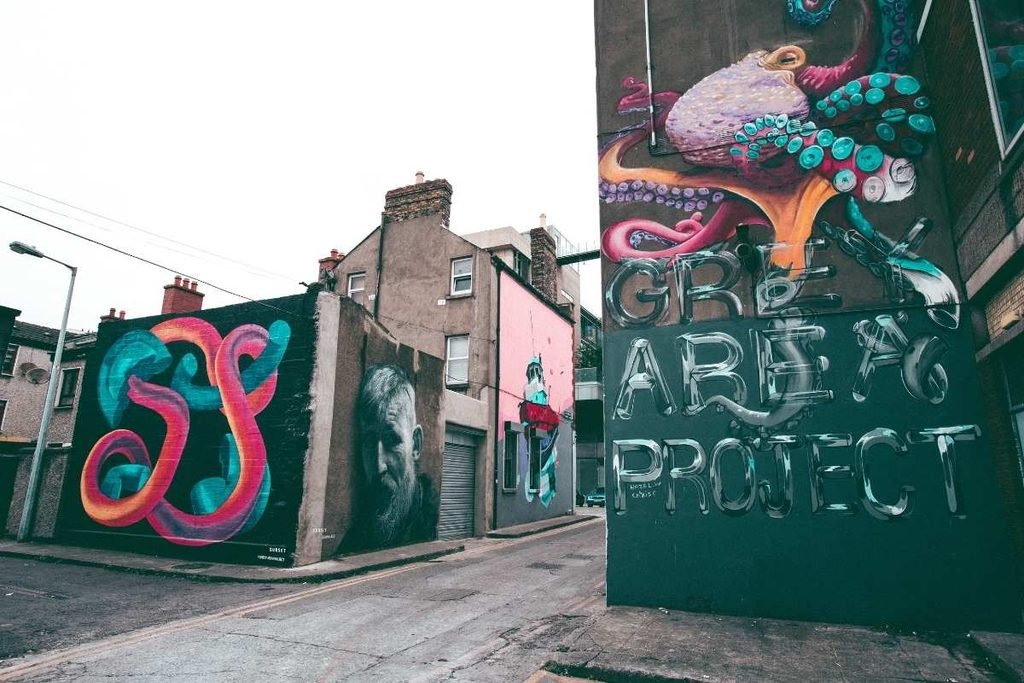
Kreuzberg provides another perspective on Berlin’s urban art.
Here, large works can become part of the visual identity of a street. Their meaning develops through their relationship with neighboring buildings, traffic, businesses and the people who use the area.
One well-known example is Victor Ash’s Astronaut/Cosmonaut, created in connection with the Backjumps project in 2007. Berlin’s urban art landscape also includes works developed through initiatives such as the Berlin Mural Fest and URBAN NATION’s ONE WALL project.
These examples show why it is useful to distinguish commissioned murals from other forms of street expression. Their scale and production circumstances can differ considerably from an independently placed stencil, sticker or piece of graffiti.
Haus Schwarzenberg: art within a courtyard
Haus Schwarzenberg offers a more enclosed setting.
Its courtyard passageways bring visitors close to walls marked by urban art. The organization itself describes how the textures of the façades attract artists and contribute to the character of the site.
The experience encourages a different pace from viewing a large mural across a road. Small images, overlapping surfaces and architectural details become easier to notice.
The art also sits within a working cultural space. Looking beyond individual photographs helps visitors understand the courtyard as a place with ongoing activities and users.
URBAN NATION and art in an institutional setting
URBAN NATION brings urban contemporary art into a museum context on Bülowstraße in Schöneberg.
Its activities connect exhibition spaces with works in the surrounding streets, while projects involve artists from Berlin and abroad.
This relationship raises interesting questions. How does an image change when it is presented inside a museum? What can an exhibition explain that a street encounter leaves open?
A museum can provide interpretation, artist information and opportunities for close study. Outdoor work adds the influence of location, weather, passing pedestrians and the surrounding city.
Experiencing both settings helps reveal the range of practices grouped under urban art.
Street art, graffiti and different forms of expression
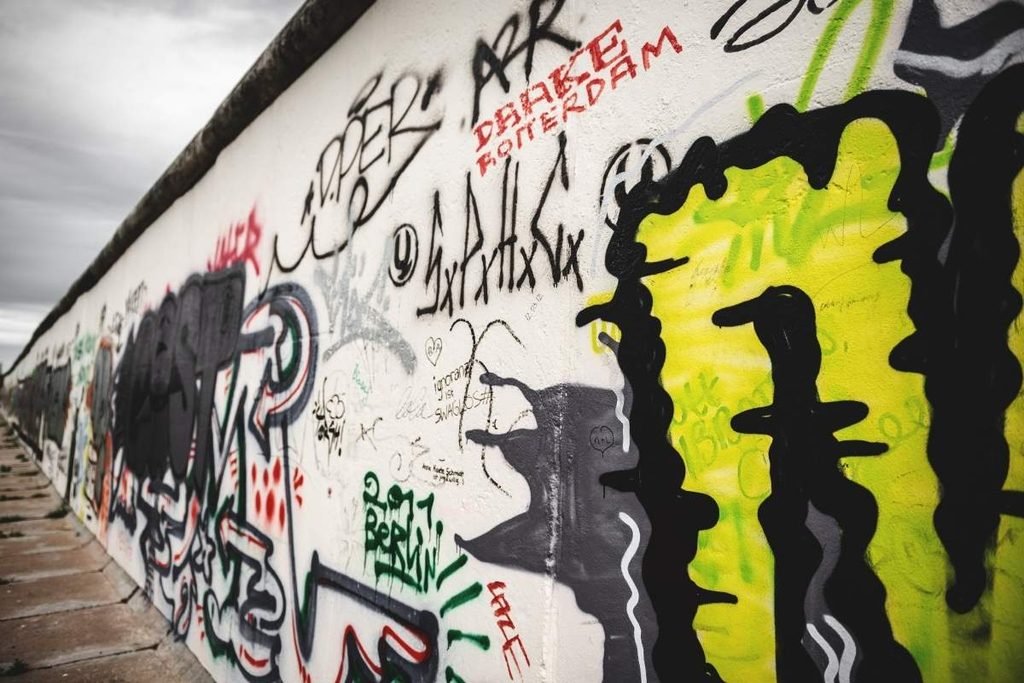
The terms “street art,” “graffiti” and “urban art” often overlap in travel writing, but they can describe different practices.
For a first encounter, it is useful to notice the form of each work:
- Graffiti writing often emphasizes names, letters and recognizable styles.
- Stencils use cut templates to produce images or lettering.
- Paste-ups place printed or drawn material onto a surface.
- Murals use a wall as the setting for a larger composition.
These categories are starting points rather than rigid boundaries. Artists can combine techniques, and the same street may contain several forms created under different circumstances.
Political expression and urban identity
Berlin’s walls can carry messages about memory, belonging and public life.
The East Side Gallery provides a particularly clear example: its paintings responded to the political transformation of 1989–1990 and to experiences of dictatorship and division.
Other works invite interpretation through their location. A portrait, slogan or repeated symbol may acquire meaning from the neighborhood in which it appears.
Visitors should leave room for uncertainty. An image does not necessarily represent a shared local opinion, and an interpretation based only on appearance may miss references understood by the artist’s intended audience.
Artist information, project descriptions and local interpretation can help fill those gaps.
How to explore Berlin’s street art
Choose an area and give yourself time to walk. Trying to connect every famous work in a single outing can reduce the experience to a sequence of photographs.
For historical context, begin with the East Side Gallery and its interpretation materials. For a different encounter, explore a mural area, courtyard or museum setting.
Look at several scales: the whole wall, the image itself and its smaller details. Where possible, identify the artist and learn whether the work was commissioned, independently placed or subsequently restored.
Remember that outdoor art can change. Treat a photograph or old map as a record of a moment rather than a guarantee that every work remains in place.
Respect the surfaces and the people using the surrounding spaces. At protected sites, avoid touching, marking or attaching anything to the artworks.
Frequently asked questions
Where can you see street art in Berlin?
Starting points include the East Side Gallery, Kreuzberg, Haus Schwarzenberg and the streets around URBAN NATION in Schöneberg. Each offers a different setting for encountering urban art.
Was the East Side Gallery painted before the Wall fell?
The gallery project was created in 1990, after the opening of the Wall. Paintings and graffiti on its western face during the divided-city period belong to an earlier part of the history.
Are the East Side Gallery paintings untouched originals?
Many works have required restoration or repainting because of weather and damage. The present gallery reflects that continuing preservation work.
Is all Berlin street art political?
Works have different intentions. Some make explicit political statements; others emphasize lettering, imagery, humor or artistic experimentation.
Is a guided street art walk useful?
A knowledgeable guide can help identify artists, explain techniques and connect works with local history. This is particularly useful when an image contains references that are difficult to interpret independently.
Keep exploring
Potsdamer Platz, Berlin: History, Berlin Wall Traces and Things to See
Potsdamer Platz can look surprisingly modern for a place with such a complicated past. Glass façades, office towers and busy streets dominate…
Read the guide
Berghain Berlin: From Power Station to Techno Landmark
Before it became a destination for electronic music, Berghain was part of Berlin’s energy infrastructure. Today, its former machinery hall holds a…
Read the guide