
Potsdamer Platz, Berlin: History, Berlin Wall Traces and Things to See
 By admin · Updated
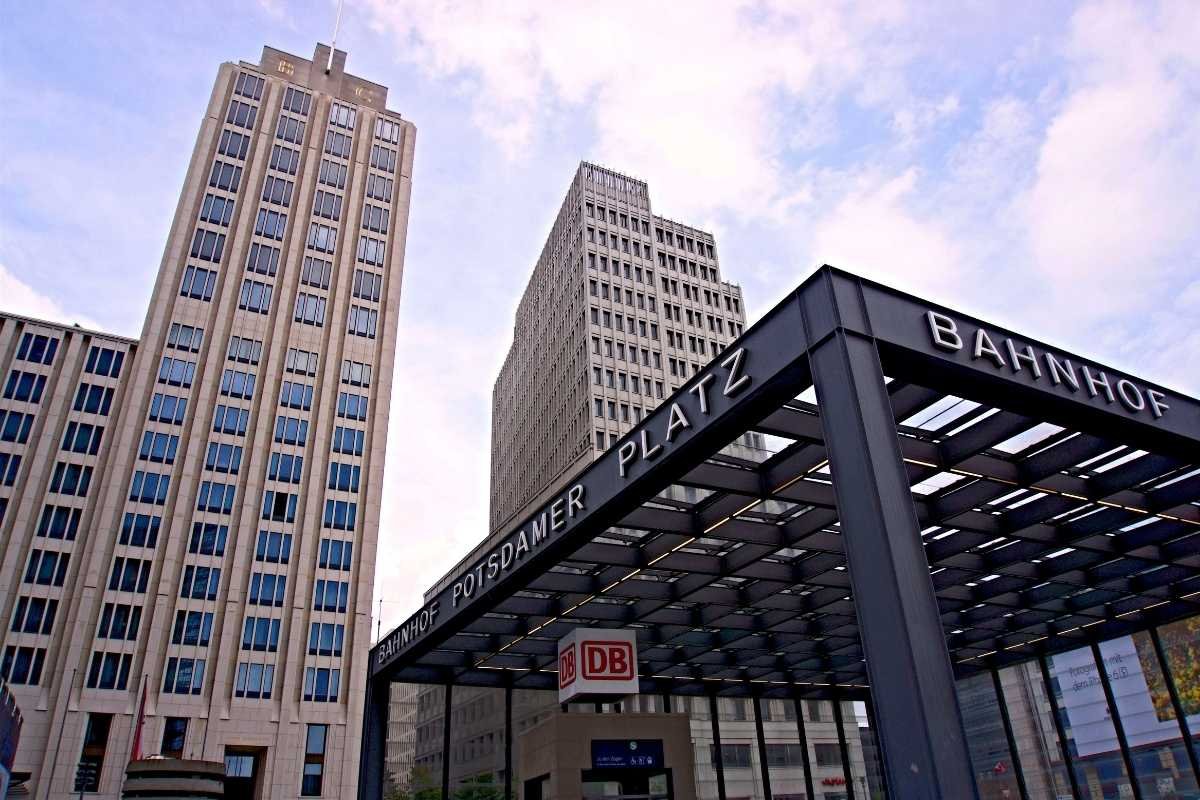
Potsdamer Platz can look surprisingly modern for a place with such a complicated past. Glass façades, office towers and busy streets dominate the view. Yet this same area once stood at the dividing line between East and West Berlin.
Its appeal becomes clearer when you look beyond the skyline. Traces of the former border, surviving historic buildings and the scale of the reconstruction reveal a place that has repeatedly changed its role in the city.
For a first visit, approach Potsdamer Platz as a neighborhood to explore on foot. The square itself is a starting point; much of the interest lies in the surrounding streets and buildings.
Why is Potsdamer Platz historically important?
Before the Second World War, Potsdamer Platz was a major intersection and a lively part of Berlin’s urban life. Wartime destruction changed the area dramatically.
The construction of the Berlin Wall in 1961 reinforced its position along the city’s division. After reunification, extensive redevelopment transformed the former border landscape into a new commercial and cultural district. Berlin’s official city website presents this sequence, urban activity, destruction, division and rebuilding, as central to understanding the square.
Today’s architecture is therefore part of the story. The contrast between the contemporary buildings and historical photographs helps explain how much of the area had to be created again.
Seeing the Berlin Wall at Potsdamer Platz
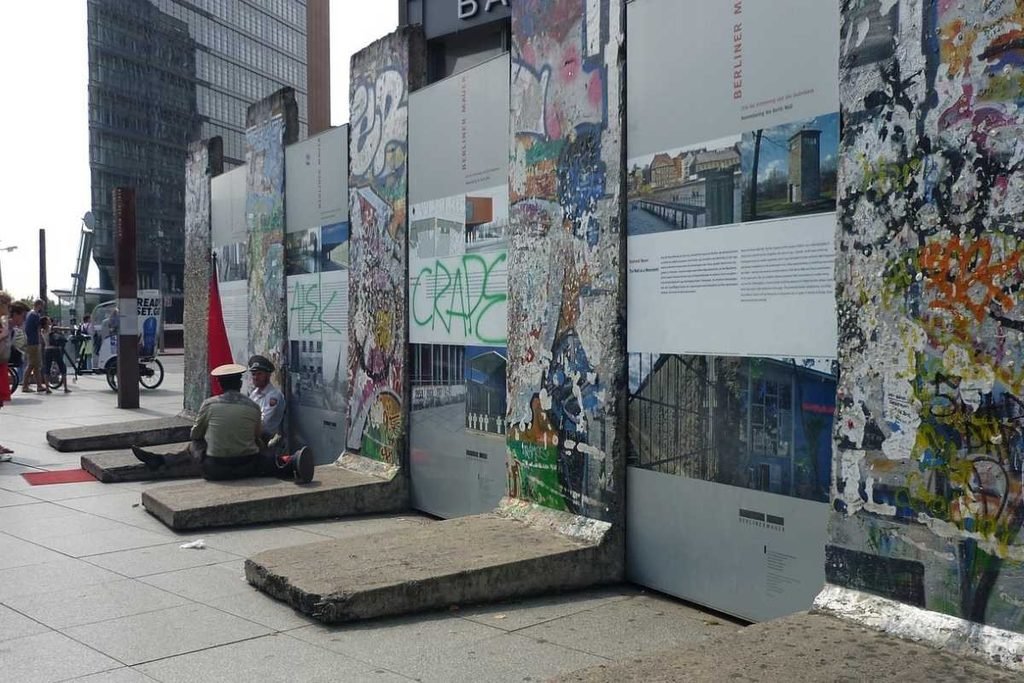
Potsdamer Platz is one of the central locations where visitors can encounter traces of Berlin’s former division.
The neighborhood’s official visitor guide identifies original Berlin Wall sections among its sights. VisitBerlin also highlights a metal strip embedded in the ground that marks the Wall’s former course.
Look at both the displayed fragments and the surrounding streets. A concrete section gives the border a physical presence, while the ground marking helps you imagine its route through what is now a busy urban space.
Read the accompanying interpretation carefully. A displayed Wall segment and a surviving section in its original position do not necessarily tell the same story.
Should this be your only Berlin Wall stop?
Our recommendation is to use Potsdamer Platz as an introduction, then visit a dedicated memorial if the history of division is a priority.
The Berlin Wall Memorial on Bernauer Straße includes an original border section, a watchtower, an outdoor exhibition and a documentation center. It offers a more extensive setting for understanding the border system and its consequences.
At Potsdamer Platz, the strongest impression comes from the contrast: a former dividing line surrounded by the everyday activity of the reunited city.
What else should you see?
The modern architecture
Walk away from the main intersection and examine the buildings from different angles. The district is more varied than a single skyline photograph suggests.
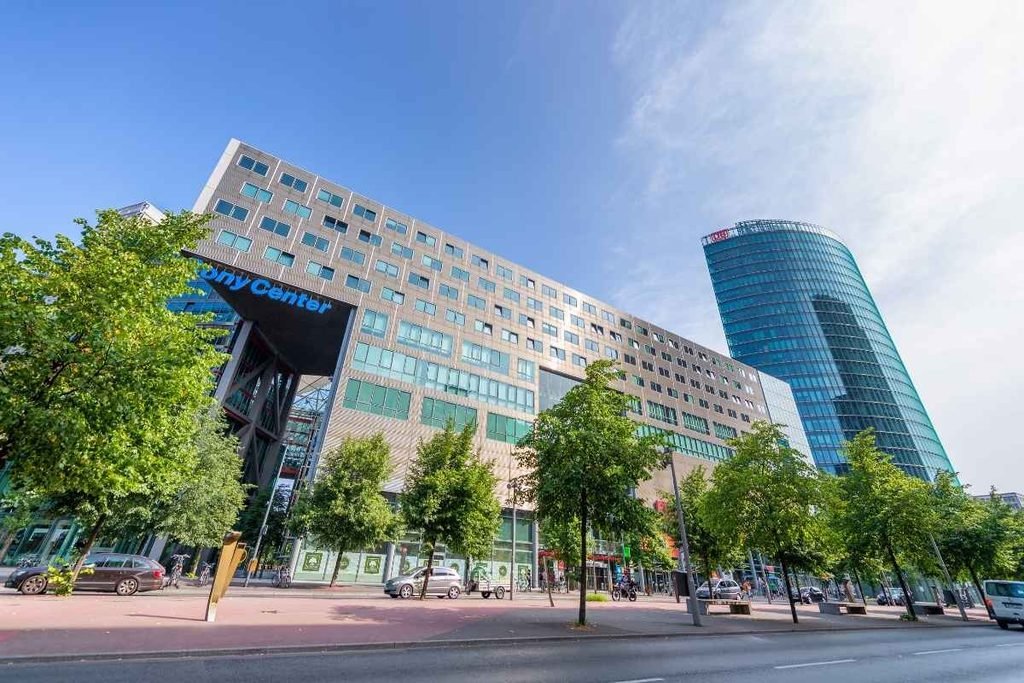
VisitBerlin identifies several architects involved in its redevelopment, including Renzo Piano, Richard Rogers and Arata Isozaki. It also highlights the Center at Potsdamer Platz, formerly known as the Sony Center, with its distinctive roof designed by Helmut Jahn.
For photography, alternate between broad street views and closer studies of façades. Notice how brick, glass and steel create different impressions within a relatively compact area.
Panoramapunkt
If you would like a view from above, consider Panoramapunkt in the Kollhoff Tower.
The attraction combines a viewing experience with an exhibition about Potsdamer Platz’s changing history. That combination is particularly relevant here: historical images help explain the transformation of the streets beneath you.
Before booking, check current opening times, admission options and visibility conditions. Consider whether you want a neighborhood-focused viewpoint or whether another observation deck already fits your Berlin itinerary.
The surrounding cultural district
Potsdamer Platz also works as a starting point for exploring the nearby Kulturforum.
The neighborhood’s visitor guide highlights the Neue Nationalgalerie, including the architectural interest of its glass-and-steel building. For travelers interested in art and architecture, combining the two areas can give the walk a clearer purpose than shopping alone.
Choose a museum according to your interests and check its individual visitor information before adding it to the day.
A simple route for your visit
For an introductory walk, we suggest:
- Begin at Potsdamer Platz. Orient yourself before heading into the surrounding district.
- Find the Wall displays and border marking. Read the interpretation and consider how the former boundary crossed the area.
- Explore the modern buildings. Change viewpoints rather than following only the busiest street.
- Add Panoramapunkt if it interests you. Treat it as a separate attraction with its own admission arrangements.
- Continue toward the Kulturforum or another planned stop.
Allow approximately 45–60 minutes for an introductory outdoor walk. This is our suggested planning allowance, not an official visit duration. Add time for an observation deck, museum or meal.
Explore Potsdamer Platz with a guided tour
You can walk around Potsdamer Platz independently, but a guided tour can help you understand what the modern skyline no longer reveals: the streets that disappeared, the border that divided the area and the rebuilding that followed reunification.
For a first visit, look for a Berlin Wall or Cold War walking tour that includes Potsdamer Platz. A guide can connect the landmarks into a clearer story, helping you picture the divided city rather than simply photograph its remaining fragments.
Choose a history-focused itinerary if you want to understand life along the former border, or an architecture tour if you are more interested in how Berlin rebuilt this part of its center.
Explore Berlin’s history beyond the photographs. Find a guided tour that includes Potsdamer Platz and fits your itinerary.
Book Now:
- Cold War, Berlin Wall, Spies and the East Side Gallery
- Discover Berlin Half-Day Walking Tour
- Berlin’s Best: 2 Hour Walking Tour Third Reich and the Cold War
How to make the visit more rewarding
Our main suggestion is to look at a historical photograph before you arrive. It makes the modern streets easier to interpret and gives the Wall fragments more context.
While walking, alternate between looking up and looking down. The architecture draws attention upward, but the former border route is also recorded at ground level.
Avoid treating every displayed fragment as a photo prop. These objects relate to a border that affected real lives; reading the interpretation adds meaning to the visit.
Is Potsdamer Platz worth visiting?
Potsdamer Platz is particularly worthwhile if you are interested in Berlin’s division, reunification or modern architecture.
Its interest lies less in a single monument than in the relationship between different periods. The contemporary district occupies a place whose earlier buildings, streets and connections were profoundly disrupted.
Give yourself enough time to notice those contrasts. A short, informed walk can reveal considerably more than a quick stop at the intersection.
Frequently asked questions
Is Potsdamer Platz in Berlin or Potsdam?
It is in Berlin. Do not confuse the square with the separate city of Potsdam when planning transport.
Can you see Berlin Wall sections there?
Yes. Wall sections are displayed in the area, and a ground marking records the former border route.
Is visiting Potsdamer Platz free?
Walking through the public square and streets does not require an attraction ticket. Individual venues have their own admission arrangements.
How long should you spend there?
Our suggested allowance is 45–60 minutes for an introductory outdoor walk. Allow longer for museums, Panoramapunkt or a meal.
Is Potsdamer Platz enough for learning about the Berlin Wall?
It is a useful introduction. For a more detailed visit, we recommend adding the Berlin Wall Memorial on Bernauer Straße.
Keep exploring
Berghain Berlin: From Power Station to Techno Landmark
Before it became a destination for electronic music, Berghain was part of Berlin’s energy infrastructure. Today, its former machinery hall holds a…
Read the guide