
Plaza de España, Seville: What to See and How to Plan Your Visit
 By admin · Updated
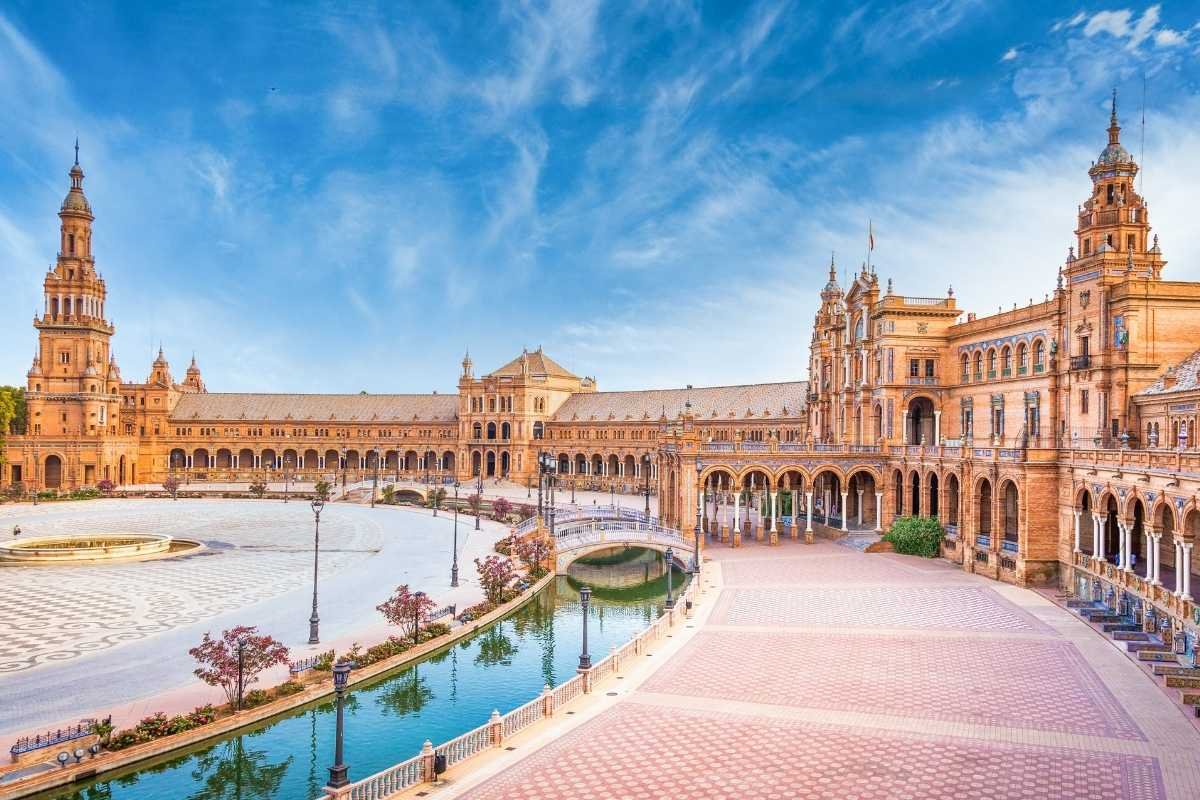
Plaza de España makes an impression before you reach its buildings. Across the open square, a curved façade stretches between two towers, with a fountain, canal and ceramic details drawing your attention in different directions.
The best way to explore is to resist taking one photograph and moving on. Start with the overall composition, then walk closer to examine the tiled benches, arches and decorative ironwork. The change in scale, from a monumental square to an individual painted scene, is what makes this stop rewarding.
Book Now: Seville’s Plaza de España: A Self-Guided Tour
Why was Plaza de España built?
Plaza de España was designed by architect Aníbal González for Seville’s Ibero-American Exposition of 1929.
Its design combines Renaissance-inspired forms with materials associated with local craftsmanship, including exposed brick, ceramics and wrought iron. The semicircular building, two towers, arcaded galleries and central fountain form a coordinated architectural ensemble.
Although its historic appearance might suggest a much older monument, the square belongs to a twentieth-century exhibition project. Knowing that context helps explain its theatrical proportions: this was a place intended to present an ambitious image of Seville.
What to see in Plaza de España
The curved façade and towers
Begin with a view from the open square. From here, you can appreciate how the long façade connects the towers and frames the central space.
Then move closer. Look at how the arches repeat along the galleries and how ceramic decoration introduces color against the brickwork. A wide photograph captures the scale; a closer view reveals the craftsmanship.
The ceramic benches
The decorated provincial benches are among the square’s most distinctive features. Rather than treating them only as places to sit, pause to look at the painted scenes, lettering and ornamental borders.
Spain’s official tourism website identifies the ceramic benches as a defining element of the monument. They offer a useful counterpoint to the grand architecture: detailed compositions that reward a slower visit.
Choose a few to examine closely instead of trying to photograph every panel. Look for differences in the subjects and decorative treatment.
The canal and bridges
The canal follows the curve of the complex, introducing water between the open square and the building. Its bridges provide different viewpoints along the façade.
Seville’s tourism office describes the four bridges as representing the historic kingdoms of Castile, León, Aragon and Navarre. Boat rental is also listed as an activity on the canal; check the operating arrangements locally if you want to include it.
A boat ride is optional. You can appreciate the canal and its relationship with the architecture during a walk around the square.
A simple walking route around the square
Our suggested route is deliberately unhurried:
- Start with the broad view. Take in the fountain, curved building and towers before concentrating on individual details.
- Walk toward the canal. Use the changing angles to see how the bridges frame the façade.
- Examine several ceramic benches. Give yourself time to study the scenes rather than stopping only for portraits.
- Continue along accessible galleries. Look for repeated arches, decorative ceilings and variations in light.
- Finish with a walk in María Luisa Park.
Allow approximately 45–60 minutes for the square if you enjoy architecture and photography. This is our suggested planning allowance, not an official visit duration. Add more time for a boat ride or a longer park walk.
When should you visit?
Our preference would be an early visit for a slower start to the day, or a late-afternoon stop when photography is a priority.
Avoid scheduling the visit so tightly that you have to leave after your first photograph. The square is better suited to wandering, noticing details and changing your viewpoint.
Before setting out, check the official Plaza de España visitor page. Seville’s tourism office warns that concerts and other events can affect access, so an event calendar is useful alongside the usual opening information.
Photography tips for Plaza de España
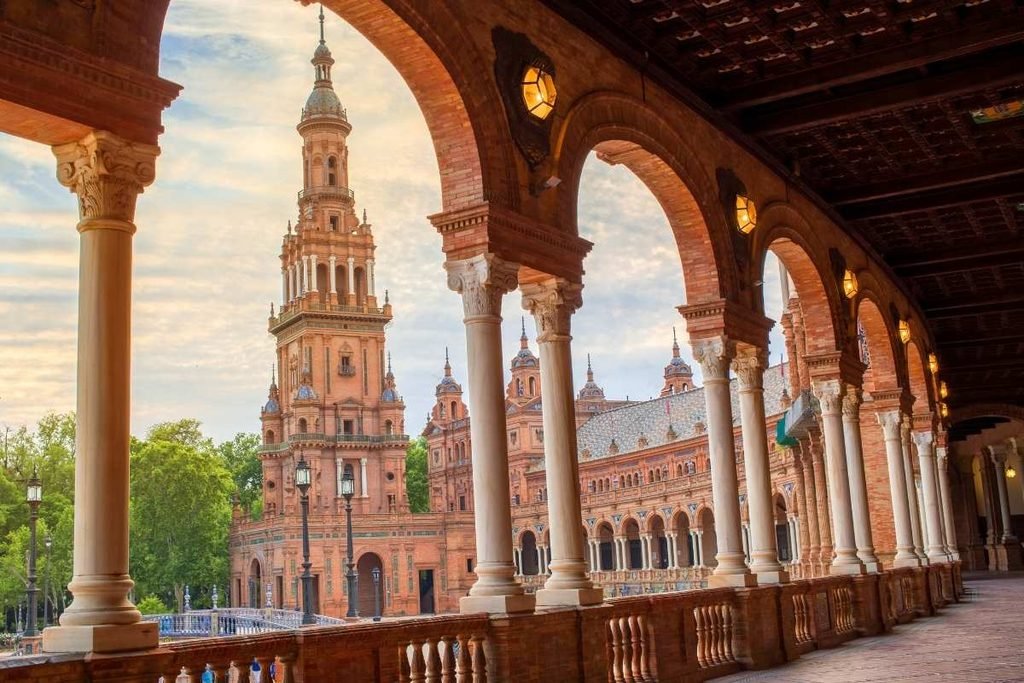
For a varied set of photographs, think in three scales.
Wide views show the relationship between the building, water and open space. Leave room around the architecture rather than filling every frame with one detail.
Medium views work well for bridges, arches and sections of the façade. Try changing your position before changing your zoom.
Close-ups reveal the ceramic work, lettering and decorative textures. These can tell as much about the square as the familiar panoramic view.
If you are photographing someone on a bridge or beside a bench, keep the route clear and avoid occupying the space for an extended session. Other visitors should be able to enjoy the same viewpoints.
Combine the visit with María Luisa Park
Plaza de España sits within the setting of María Luisa Park, making the two a natural combination.
The park also contains Plaza de América, another work associated with Aníbal González and the exhibition-era landscape. Seville’s official architectural route connects these locations as part of a wider exploration of the city’s 1929 heritage.
For a compact itinerary, explore the square and choose a short park walk afterward. If architecture is a main interest, leave a larger block of time to follow the exhibition theme beyond this single monument.
Should you book a guided tour?
A self-guided visit suits travelers who mainly want to walk, take photographs and examine the visible details at their own pace.
A guided experience may be more useful if you want deeper context about the exhibition, the architect or the wider development of Seville. Before booking, check how much time the itinerary actually spends at the square.
Also distinguish between a walking tour that includes Plaza de España as a stop and a tour focused on its architecture. Those descriptions can represent very different experiences.
Book Now: Seville’s Plaza de España: A Self-Guided Tour
Is Plaza de España worth visiting?
For travelers interested in architecture, ceramics or photography, Plaza de España deserves more than a passing stop.
Its appeal lies in the combination of scales: a monumental setting that can be understood from a distance, followed by decorative details that invite you to move closer. Add a walk through the park, and it becomes a relaxed part of a Seville itinerary rather than simply another landmark to photograph.
Frequently asked questions
Who designed Plaza de España in Seville?
Architect Aníbal González designed it for the Ibero-American Exposition of 1929.
What are the decorated benches?
They are ceramic compositions associated with Spanish provinces, featuring painted scenes and decorative details.
Can you take a boat ride?
Boat rental is listed by Seville’s tourism office as an activity on the canal. Confirm current availability, prices and operating arrangements at the venue.
How long should you allow?
Our suggested allowance is 45–60 minutes for an unhurried visit to the square. Add time for boating, photography or María Luisa Park.
Can events affect access?
Yes. Check official visitor information and the events calendar before going, particularly if you have limited time in Seville.