Prague Astronomical Clock: History, How It Works and Visiting Tips
 By admin · Updated
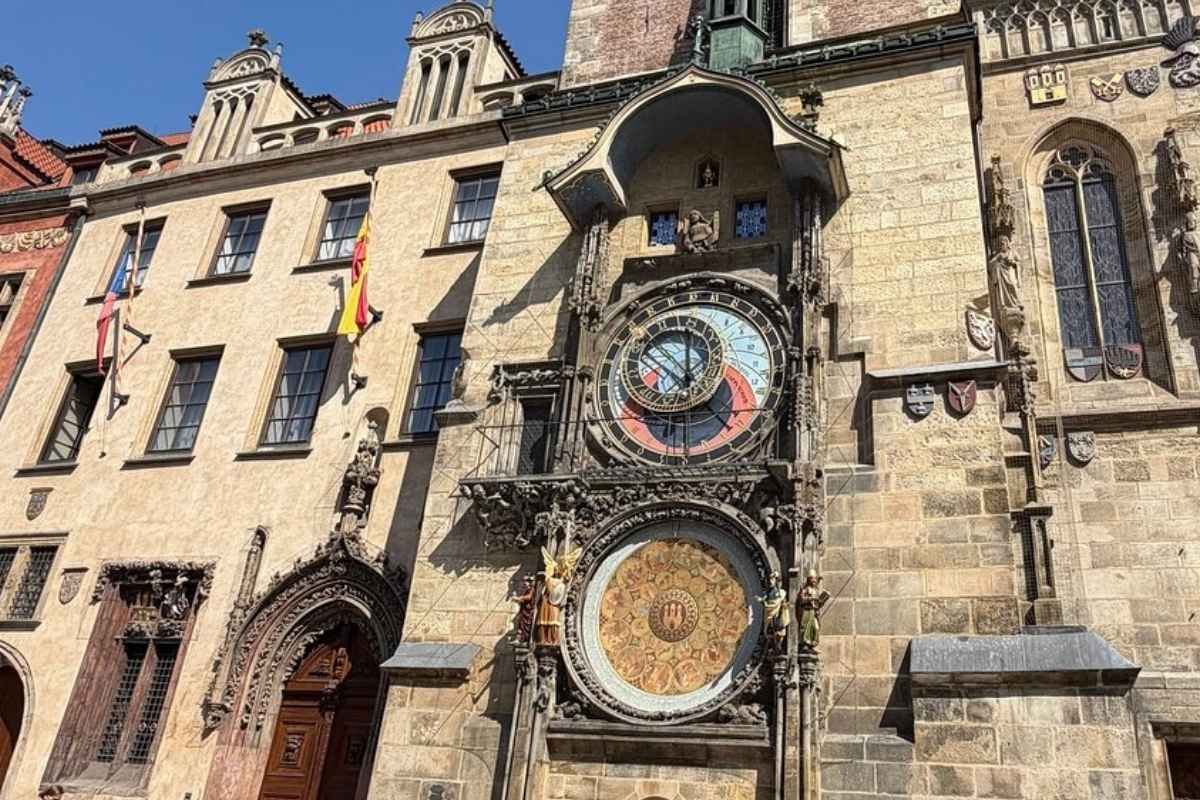
The Prague Astronomical Clock rewards a closer look. Its moving figures attract attention on the hour, but the intricate dials beneath them tell a much larger story about astronomy, craftsmanship and the way medieval Europeans understood time.
Known locally as the Orloj, the clock is mounted on the southern side of the Old Town Hall tower. You can admire it from Old Town Square, then decide whether to extend your visit into the town hall and its tower.
For a first visit, it helps to separate three experiences: studying the clock face, watching the apostles appear and visiting the building behind it.
Book a Ticket to the Prague Astronomical Clock Tower
What is the Prague Astronomical Clock?
The Orloj combines an astronomical dial, a calendar dial and a mechanical procession known as the Walk of the Apostles.
Its oldest mechanical components date to 1410 and are associated with clockmaker Mikuláš of Kadaň and astronomer Jan Šindel. The moving figures and other elements developed later, so the monument you see today represents several periods of craftsmanship rather than one unchanged medieval installation.
That distinction makes the clock more interesting. It is both a historic instrument and a piece of machinery that successive generations have maintained, repaired and adapted.
How to look at the clock
Instead of trying to understand every symbol at once, read the monument in three sections.
The astronomical dial
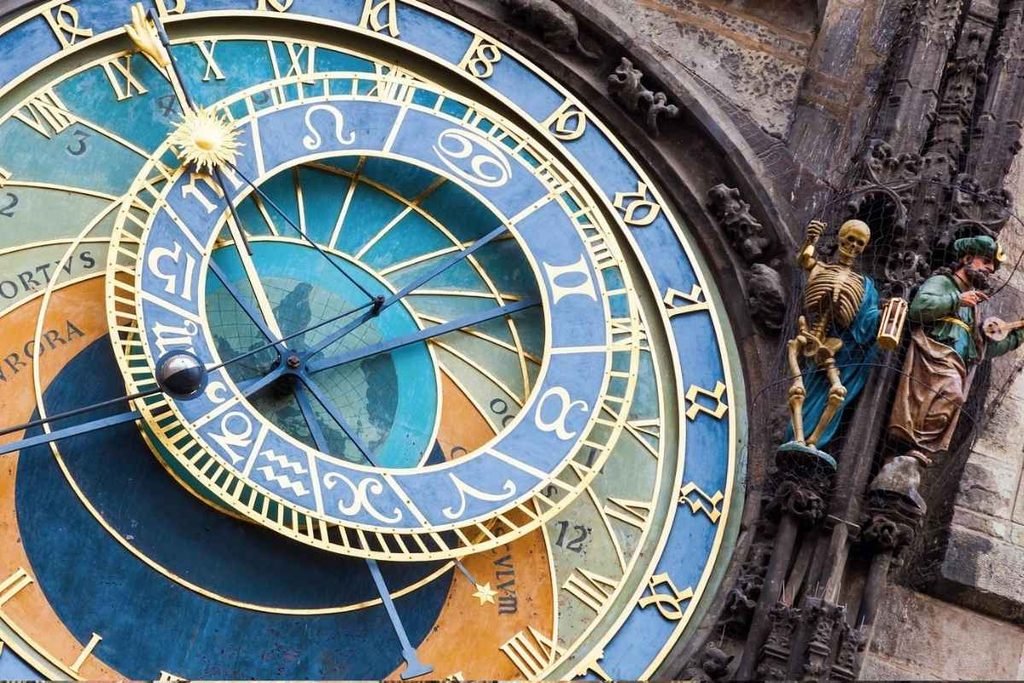
The upper circular dial represents astronomical information, including the positions of the Sun and Moon. Its overlapping rings and markings make it considerably more complex than an ordinary clock face.
Look for the relationship between the hands, the zodiac ring and the colored background. Even without decoding every detail, you can appreciate how the mechanism combines timekeeping with a model of the sky.
The Walk of the Apostles
The small windows above the astronomical dial are where the apostles appear during the hourly procession. Other figures beside the clock also move.
Watch the windows and surrounding sculptures rather than focusing only on the clock hands. This is the animated part of the monument, but it is only one element of the whole design.
The calendar dial
The lower circular dial serves a different purpose. Its decorative medallions represent the months, adding the annual calendar to the astronomical information above.
Taken together, the three sections turn the façade into an unusually elaborate public display of time, astronomy and the passing year.
When does the hourly procession take place?
Prague City Tourism currently lists the apostles’ procession on the hour from 8 a.m. to 11 p.m. Check the official attraction page before visiting, particularly if you are planning around the first or last performance.
Our suggestion is to arrive around 10–15 minutes before your chosen hour. That gives you time to find a comfortable viewing position and examine the dials before the figures move.
Keep your expectations focused on the craftsmanship: this is a historic mechanical procession, rather than a large theatrical performance. The details are the reason to linger.
Do you need tickets to see the clock?
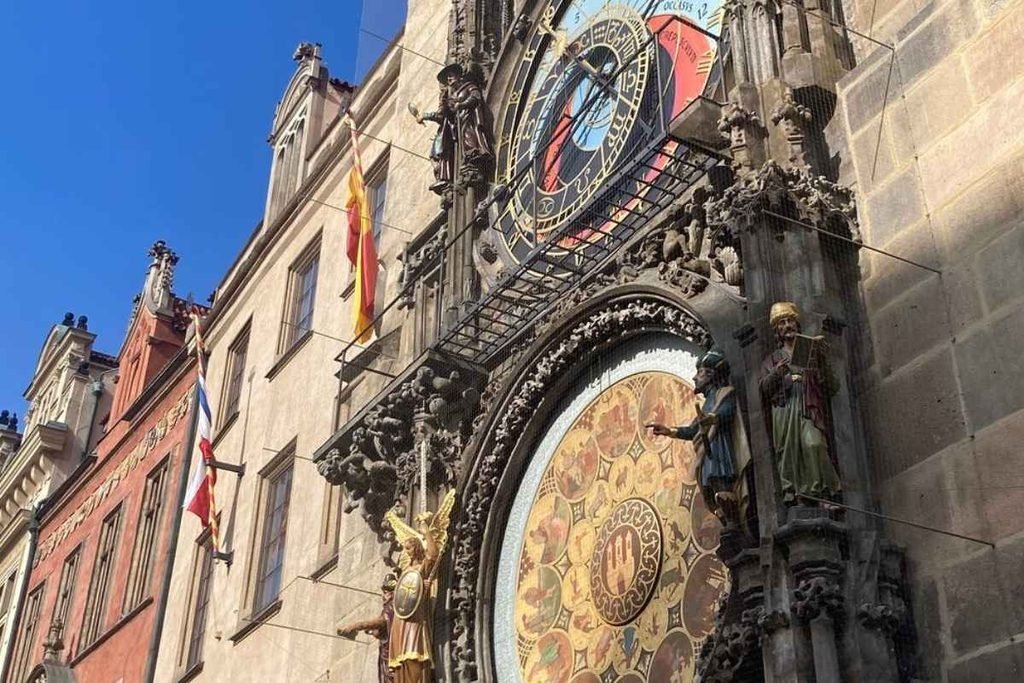
You do not need an admission ticket to view the exterior clock from Old Town Square. Going inside the Old Town Hall or visiting its tower is a separate experience.
Before booking anything described as an “Astronomical Clock ticket,” read the inclusions carefully. Check whether the product covers the tower, historical interiors, a guided visit or a combination of these. The official ticketing page distinguishes products with and without elevator access, so do not assume every ticket offers the same route through the building.
Use the official Old Town Hall visitor page to review current admission options and opening arrangements.
Book a Ticket to the Prague Astronomical Clock Tower with Audio Guide
Should you visit the Old Town Hall too?
Consider extending your visit if you enjoy historic buildings as much as outdoor sightseeing.
The Old Town Hall was established in 1338. Its visitor offering includes the tower and historical interiors, with spaces such as the chapel, state rooms and underground areas. These give the clock a broader setting within Prague’s civic history.
The decision comes down to your interests and available time. A short stop outside suits a compact walking itinerary. A visit inside makes more sense when you want to explore the building rather than simply see the hourly procession.
The legend of the blinded clockmaker
One of the stories associated with the Orloj concerns Master Hanuš. In the legend, Prague’s councillors have him blinded so that he cannot create an equally impressive clock elsewhere. He then takes revenge by stopping the mechanism.
Prague City Tourism presents this account as a legend. It should not be confused with the documented origins of the clock or used as a factual explanation of its construction.
It is a memorable story, but the real history of the Orloj—its makers, later additions and continuing maintenance—offers plenty of fascination without it.
Planning a stop in Old Town Square
For a relaxed visit, use this simple sequence:
- Find the clock before the hour. Look at the astronomical and calendar dials while you have time to study them.
- Watch the procession. Keep the upper windows and side figures in view.
- Step away afterward. Give yourself space to appreciate the town hall façade and the wider square.
- Continue inside if you have booked admission. Follow the arrangements for your specific ticket.
As a planning allowance, set aside around 20–30 minutes for the exterior clock, including a short wait. This is our suggested itinerary allowance, not an official visit duration.
If you want detailed photographs, consider returning at a different time from the hourly procession. Separating photography from watching the figures makes it easier to enjoy both.
Is the Prague Astronomical Clock worth seeing?
For a first trip to Prague, the clock makes a worthwhile stop, especially when you take a moment to understand what you are looking at.
Its appeal goes beyond the moving apostles. The astronomical display, calendar and mechanical figures combine scientific ideas with decorative craftsmanship on the wall of a historic civic building.
Come for the procession if you like, but leave time for the dials. They are what turn a quick photo stop into a more rewarding encounter with the city’s past.
Frequently asked questions
Where is the Prague Astronomical Clock?
It is mounted on the southern side of the Old Town Hall tower, facing the public space around Old Town Square.
How old is the clock?
Its oldest mechanical components date to 1410. Other features were added or replaced over the following centuries.
Is watching the clock free?
Yes. You can view the exterior and watch the hourly procession from the square without buying admission to the town hall.
Is a tower ticket needed for the procession?
No. The exterior procession and the paid visit to the tower are separate experiences.
How much time should you allow?
For the exterior, our suggestion is around 20–30 minutes, including time to wait for the hour and examine the details. Allow additional time if you plan to visit the town hall.