
Mont-Saint-Michel: History, Architecture and the Landscape of the Bay
 By Robson Caitano · Updated
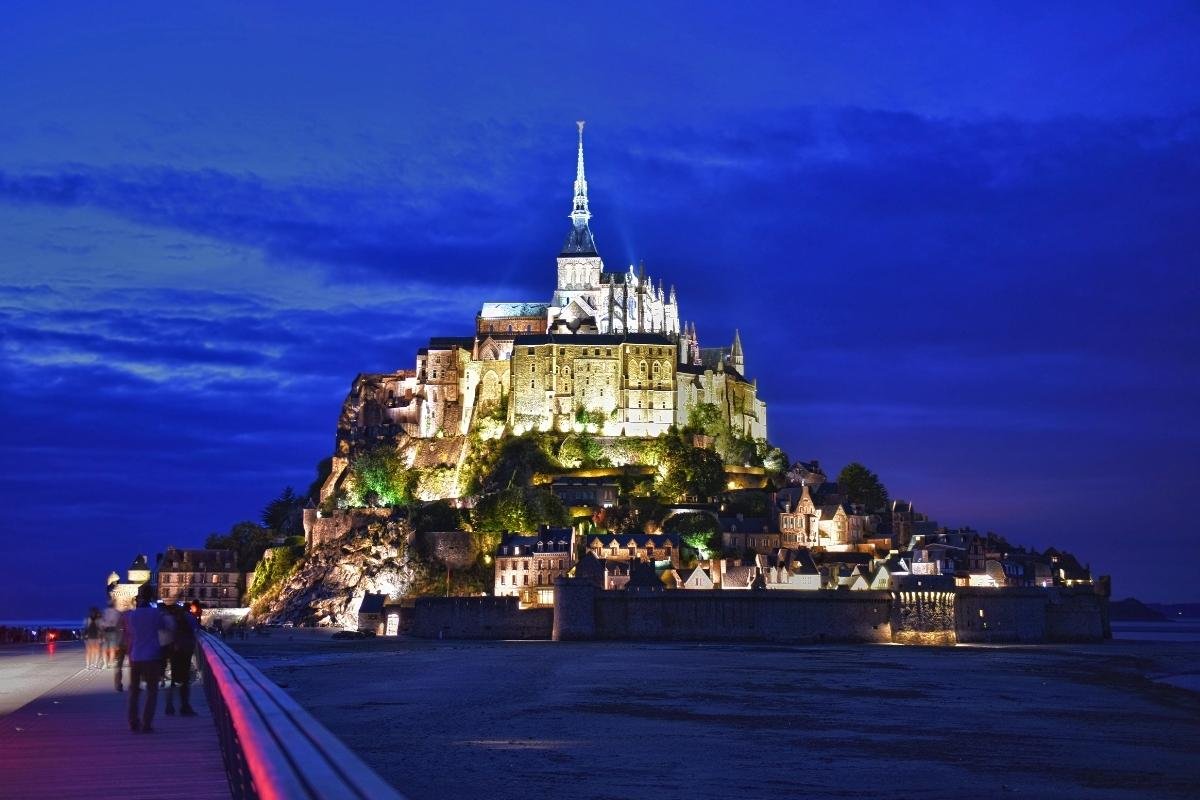
Mont-Saint-Michel rises above an open landscape of sandbanks, tidal channels and sea. Its silhouette is immediately recognizable: a village clustered around a rocky mount, defensive walls below and an abbey crowning the summit.
Yet its appearance is only the beginning of its story. This landmark in Normandy developed through centuries of pilgrimage, monastic life, construction and adaptation. Understanding it means looking at the relationship between the buildings and the landscape that shaped them.
The abbey, village and surrounding bay form a connected historical setting. Each helps explain why Mont-Saint-Michel became such an important religious destination and why it remains an exceptional architectural achievement.
Book your Mont Saint Michel Ticket and Audio Tour
The origins of Mont-Saint-Michel
The foundation story begins in 708. According to religious tradition, the Archangel Michael appeared to Aubert, Bishop of Avranches, and instructed him to establish a sanctuary on the rocky island then known as Mont-Tombe.
In 966, Benedictine monks settled on the mount at the request of Richard I, Duke of Normandy. Their arrival marked a decisive stage in the development of the monastery. Construction of the Romanesque abbey church traditionally dates from 1023.
These dates describe successive stages rather than a single construction campaign. The monument visible today developed over generations, as builders enlarged and adapted an increasingly complex religious site.
That distinction matters when exploring the abbey. Mont-Saint-Michel represents centuries of changing needs, techniques and architectural ambitions.
How the abbey was built around the rock
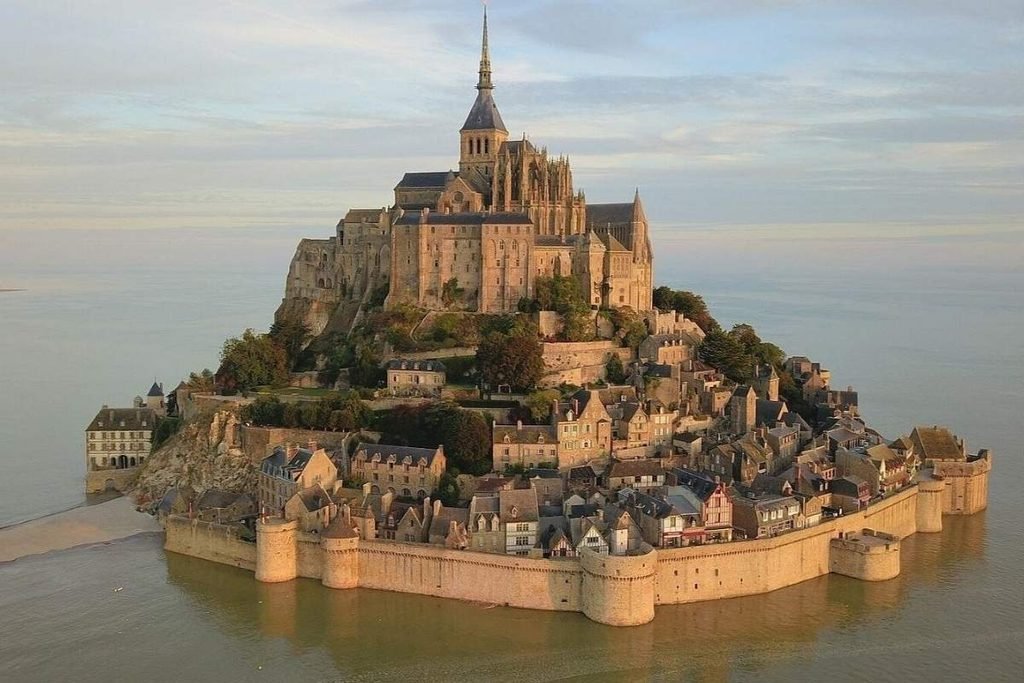
The mount offered a striking location for a sanctuary, but limited space for a growing monastery.
Builders had to accommodate the shape of the rock while creating rooms suitable for worship and communal life. Instead of spreading across a broad, level site, the buildings developed vertically and around the slopes.
The abbey church stands above supporting crypts. Elsewhere, structures wrap around the mount, turning difficult terrain into the foundation of the architectural composition.
For visitors, this is one of the most useful ideas to keep in mind. A room may also form part of the support for another space above it. The building’s appearance and its structural organization are closely connected.
La Merveille: a vertical monastery
La Merveille is a particularly clear expression of this approach.
Built in the 13th century on the northern slope, it consists of two buildings arranged across three levels. Its construction used external buttresses and progressively lighter structures higher up to address the challenges of the site.
The result illustrates how medieval builders combined practical engineering with spaces designed for religious life.
When moving through this part of the abbey, consider the relationships between floors, walls and supporting elements. The achievement becomes easier to appreciate when individual rooms are understood as parts of a larger structure.
Architecture shaped by daily life
The monastery’s layout also reflected the Benedictine community’s routines.
Prayer, work and communal life required different spaces, and the arrangement of rooms responded to those activities as well as to the terrain.
This gives the architecture a human dimension. Behind the monumental exterior was a place organized around repeated daily tasks, shared obligations and religious observance.
Pilgrimage and the village below
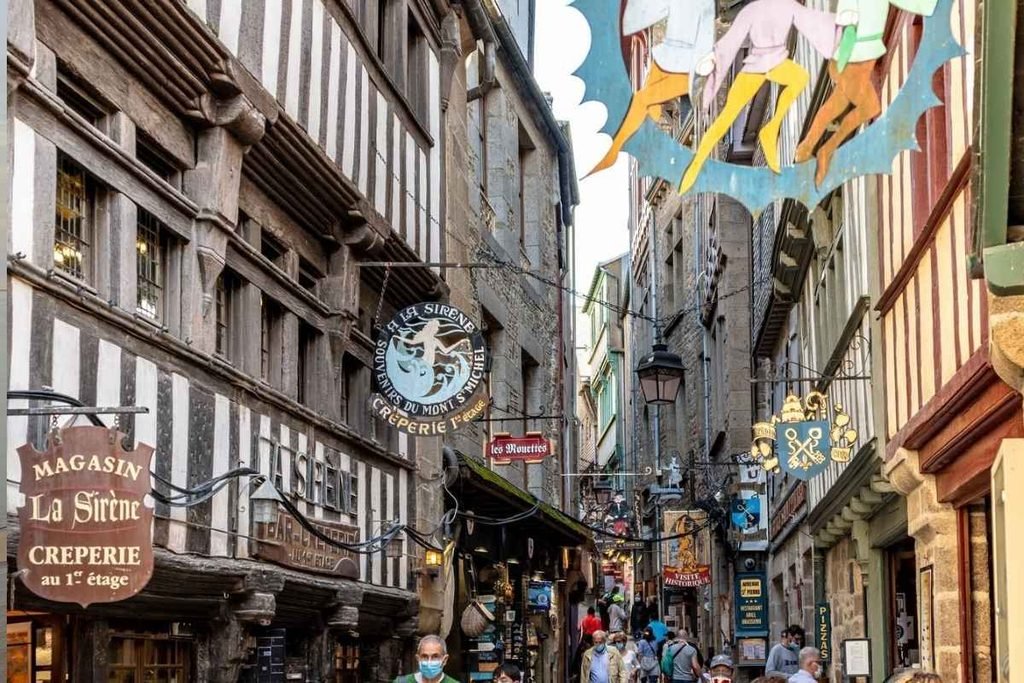
Mont-Saint-Michel became an important destination for medieval pilgrims. Its religious significance helped shape the settlement that developed beneath the abbey.
The village and monastery should therefore be understood together. One occupied the summit, while the other grew along the approach below, within a setting defined by the rock and the surrounding bay. UNESCO recognizes this relationship between the abbey, its settlement and its natural environment as central to the site’s importance.
Walking uphill provides a sense of that organization. The experience changes as the route moves from village streets toward the religious complex above.
For historical travelers, this progression is worth noticing. The approach forms part of the meaning of the place.
From religious stronghold to prison
Mont-Saint-Michel’s history also includes military and penal uses.
Its defenses resisted English attacks during the Hundred Years’ War. After the French Revolution, the abbey became a prison, a role that continued until 1863. It was classified as a historic monument in 1874, followed by extensive restoration.
These changes complicate the familiar image of a timeless medieval sanctuary. The buildings survived through periods when their purpose changed dramatically.
Conservation has consequently involved understanding several historical layers, rather than preserving a place that remained untouched.
Why the tides matter
The bay is essential to Mont-Saint-Michel’s identity.
At different stages of the tide, the surrounding landscape can appear as broad exposed sandbanks, channels of water or a more extensive marine setting. During certain high tides, water covers the entrance esplanade and temporarily affects access. The local tourism office publishes tide schedules to help visitors understand these conditions.
There is no single appearance that defines the bay. Exposed sands reveal its scale and channels; higher water emphasizes the separation between the mount and the surrounding coast.
For photography and observation, both offer something valuable. Checking the tide timetable helps you understand the landscape you are likely to encounter.
Book your Mont Saint Michel Ticket and Audio Tour
Walking across the bay
A bay crossing is a distinct experience from reaching the mount by its established access route.
Guided walks explore the tidal environment and recall the journeys of earlier pilgrims. Routes vary, with different starting points and distances.
For a crossing over the sands, use a guide certified by the prefecture. Tides, channels and unstable ground make local expertise essential.
The value of a guided crossing also lies in interpretation: understanding how the landscape changes and how people have moved through it over time.
Mont-Saint-Michel as a World Heritage Site
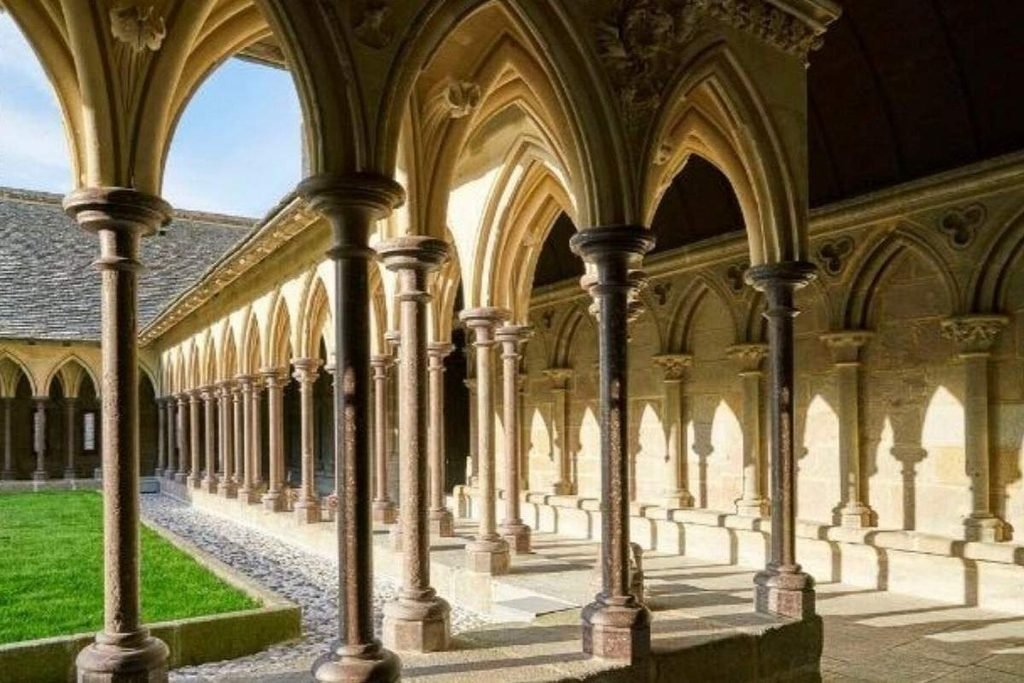
Mont-Saint-Michel and its Bay received UNESCO World Heritage recognition in 1979.
Its significance extends beyond the abbey considered alone. UNESCO emphasizes the combination of architecture and natural setting, including the technical solutions required to build on the rocky island.
Protecting that relationship involves the wider landscape as well as the buildings. A major project carried out between 2006 and 2015 reconfigured access and addressed the progressive silting that threatened the mount’s maritime character.
The site’s preservation is therefore an ongoing process involving architecture, water, sediment and visitor access.
What to notice during a visit
Begin by observing the mount from a distance. Its overall form makes the relationship between the village, walls and abbey easier to understand.
As you climb, pay attention to changes in scale. Narrow streets and enclosed passages give way to larger architectural spaces and wider views.
Inside the abbey, look for evidence of vertical construction. Ask what supports the room you are standing in and what may lie above or below it.
Finally, take time to look outward. The bay explains much of what makes the monument distinctive. A visit centered entirely on the buildings misses an important part of their historical setting.
Book your Mont Saint Michel Ticket and Audio Tour
Frequently asked questions
Is Mont-Saint-Michel a castle?
Its central monument is an abbey. The mount also contains a village and defensive structures, which contribute to its fortified appearance.
Is Mont-Saint-Michel in Normandy or Brittany?
Mont-Saint-Michel is in Normandy, close to Brittany. Its geographical position helps explain its connection with the landscapes and travel routes of both regions.
When was Mont-Saint-Michel built?
Its sanctuary tradition dates to 708, and Benedictine monks settled there in 966. The abbey developed through successive construction campaigns over the following centuries.
Why is its architecture important?
The buildings demonstrate how medieval builders adapted an extensive religious complex to a steep, confined rocky site. UNESCO identifies that combination of architecture and landscape as a defining achievement.
Can you cross the bay on foot?
Guided crossings are available. Choose a certified guide and a route suited to your fitness and schedule; walking over the tidal sands requires different preparation from using the established approach to the mount.
Keep exploring
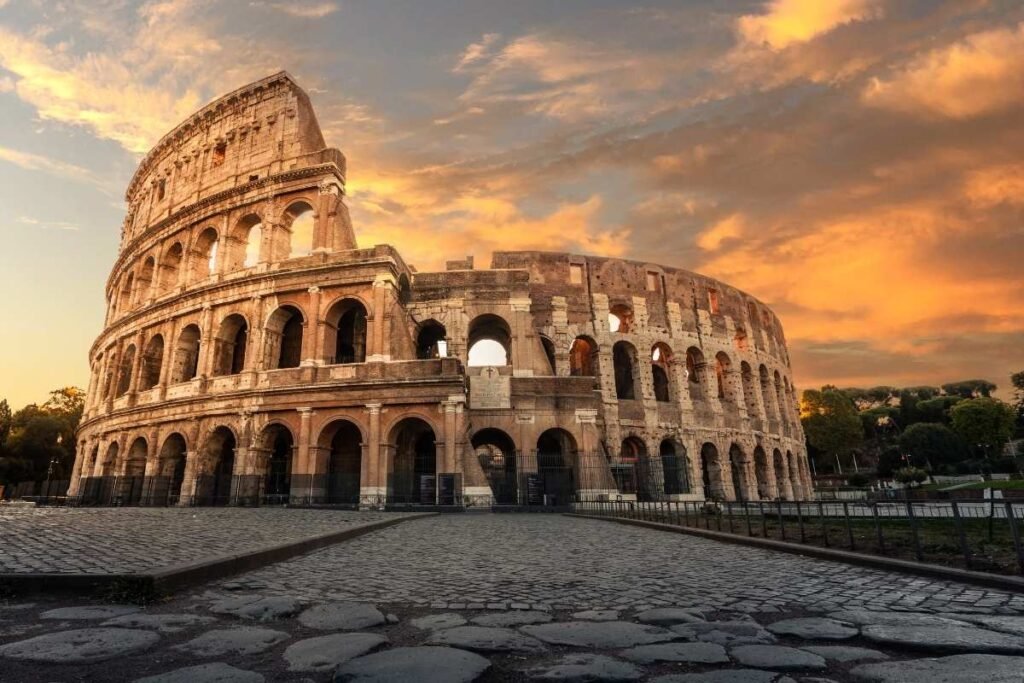
The Colosseum: Ancient Roman Engineering and Cultural Legacy
The Colosseum is one of Rome’s most recognizable landmarks, but its importance extends far beyond its appearance. Built for public spectacles, the…
Read the guide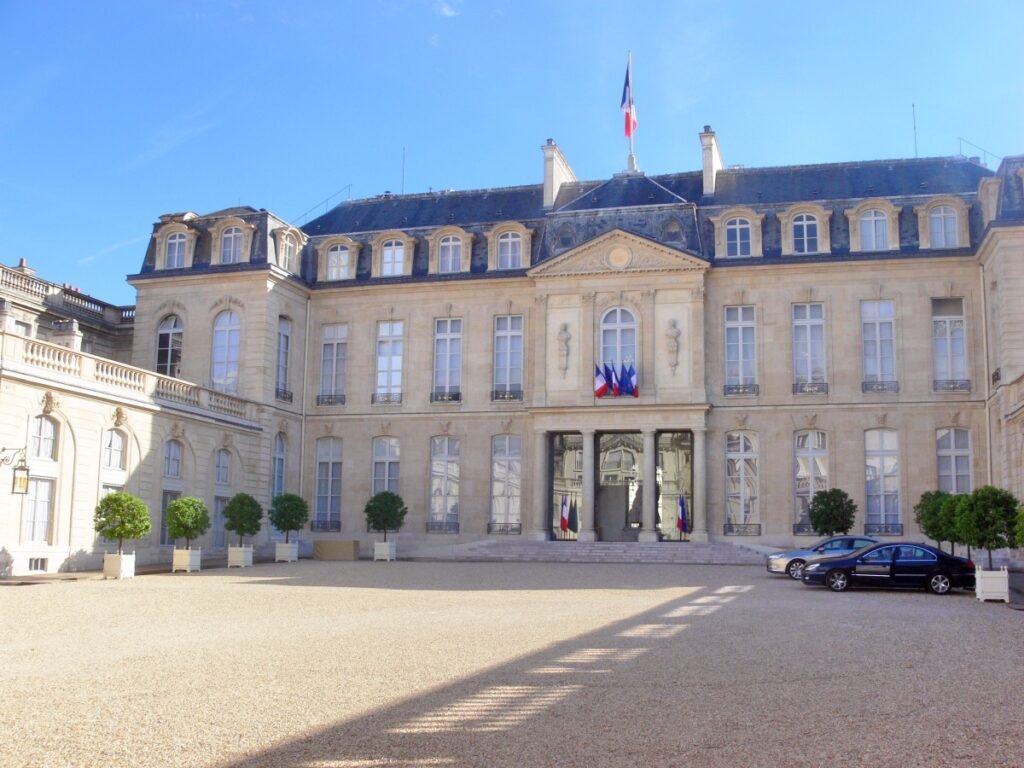
Élysée Palace, Paris: History, Visiting Options and Nearby Tours
The Élysée Palace is one of the most recognizable addresses in French public life, yet it offers a different experience from the…
Read the guide